
Businesses today communicate with customers through many channels. Customers may call a company, send an email, use live chat, message on social media, or contact support through a website. Managing all these conversations separately can make customer service slow and difficult.
An Omnichannel Contact Center brings these communication channels together in one connected system. It helps businesses manage customer conversations across voice and digital channels while giving agents better access to customer information.
For businesses using IP PBX, VoIP, SIP, and cloud communication services, an omnichannel contact center can create a more organized customer support experience. IPPBX.com.pk provides business communication solutions including IP phones, PBX systems, switches, gateways, SIP services, VoIP services, and cloud PBX solutions.
What Is an Omnichannel Contact Center?
An Omnichannel Contact Center is a customer communication system that connects different communication channels into one platform.
Instead of managing phone calls, emails, chats, and messages through separate systems, businesses can bring them together. Agents can then handle customer interactions from a central interface.
Common channels include:
- Voice calls
- Live chat
- SMS
- Social media messaging
- Website communication
- Mobile applications
- Video communication
The main goal is to make communication easier for both customers and support teams.
For example, a customer may first contact a company through live chat and later call the support team. With an integrated omnichannel system, the agent can access relevant customer information and continue the conversation without starting from zero.
How Does an Omnichannel Contact Center Work?
An omnichannel contact center connects communication channels with a central customer service platform.
A typical setup can include an IP PBX, SIP service, IP phones, VoIP connectivity, CRM software, call routing, and digital communication tools.
When a customer contacts a business, the system can route the interaction to the appropriate department or available agent.
Voice Communication
Voice calling remains an important part of customer service. An IP PBX can manage extensions, call routing, IVR, queues, transfers, and other business calling features.
VoIP allows businesses to send voice calls over an internet connection. This can support offices, call centers, remote teams, and multi-location organizations.
Digital Communication
Modern customers also use digital channels to communicate with businesses. An omnichannel platform can connect channels such as live chat, email, SMS, and social messaging with customer support workflows.
This gives agents a more complete view of customer interactions.
CRM Integration
CRM integration can connect customer information with communication activity. When an agent receives a call or message, the system may display relevant customer details, previous interactions, and support information.
As a result, agents can spend less time searching for information and more time helping customers.
Omnichannel vs Multichannel Contact Center
The terms multichannel and omnichannel are often used together, but they have an important difference.
A multichannel contact center may offer several communication channels, but those channels can operate separately.
An omnichannel contact center focuses on connecting those channels so that customer information and interactions can move between them more smoothly.
For example, a customer may start with a website chat and later move to a phone call. In an integrated environment, the support agent can have access to previous interaction information instead of treating the phone call as a completely new request.
This connected approach can make customer service more organized.
Key Features of an Omnichannel Contact Center
A modern omnichannel contact center can include many features depending on the platform and business requirements.
Automatic Call Distribution
Automatic Call Distribution, or ACD, helps distribute incoming calls among available agents or departments.
For example, sales calls can go to the sales team while technical questions can go to technical support.
Interactive Voice Response
IVR allows customers to interact with an automated phone menu.
A business can use IVR to provide options such as:
- Press 1 for Sales
- Press 2 for Customer Support
- Press 3 for Accounts
- Press 4 for Technical Support
This helps route calls to the correct team.
Call Recording
Call recording allows businesses to save conversations for training, quality checks, dispute handling, and service improvement.
Businesses should establish appropriate policies for recording and protecting customer communications.
Call Monitoring and Analytics
Contact center analytics can help managers understand call volumes, response activity, waiting times, and agent performance.
These reports can help businesses identify areas where their communication process needs improvement.
Remote Agent Support
Cloud-based communication systems can support employees working from different locations. VoIP systems can connect remote users to the same business communication infrastructure when properly configured.
Benefits of an Omnichannel Contact Center
An omnichannel contact center can provide several benefits for businesses.
Better Customer Experience
Customers can choose the communication channel that suits them. Some customers prefer phone calls, while others prefer chat or email.
Providing multiple connected channels gives customers more flexibility.
Faster Call Routing
An integrated system can automatically route calls and messages to the right department or available agent.
This can reduce unnecessary transfers and help teams respond more efficiently.
Centralized Communication
Instead of using many disconnected communication systems, businesses can manage multiple channels through a connected platform.
This makes administration easier and can give managers a clearer view of customer communication.
Improved Agent Productivity
Agents can access customer information and communication history from a central system. Therefore, they may spend less time switching between different applications.
Support for Business Growth
A scalable communication system can support businesses as they add employees, branches, departments, and communication channels.
Businesses can combine IP phones, PBX systems, SIP services, VoIP, gateways, and cloud solutions according to their requirements.
How VoIP Supports an Omnichannel Contact Center
VoIP is an important technology for modern contact centers because it allows businesses to manage voice communication through IP networks.
Businesses can use VoIP with IP phones, softphones, PBX systems, SIP services, and other communication tools.
For example, a contact center can connect its agents to an IP PBX and use call queues, IVR, call routing, recording, and monitoring features.
You can learn more about business VoIP solutions through IPPBX VoIP Services.
IPPBX.com.pk describes its VoIP offering as suitable for offices, call centers, and remote teams, with features such as call routing, call forwarding, voicemail, call recording, and call monitoring.
Why SIP Services Matter for Contact Centers
SIP services can connect an IP PBX to telephone networks and support inbound and outbound business calling.
For contact centers, SIP can support multiple concurrent call channels, call routing, number portability, monitoring, and other business communication requirements depending on the service configuration.
This makes SIP an important component when a business needs scalable voice connectivity for a growing support or sales operation.
Omnichannel Contact Center for Businesses in Pakistan
Businesses in Pakistan are increasingly using internet-based communication for offices, sales teams, customer support departments, and call centers.
An omnichannel contact center can help Pakistani businesses connect voice and digital communication while using technologies such as IP PBX, SIP, VoIP, IP phones, and cloud PBX.
The exact setup depends on the number of agents, expected call volume, required channels, internet infrastructure, CRM requirements, security needs, and budget.
For this reason, businesses should first identify their communication requirements before selecting hardware and services.
How to Choose an Omnichannel Contact Center Solution
Before implementing an omnichannel contact center, consider the following factors:
Number of Agents
Determine how many agents will use the system today and how many you may need in the future.
Communication Channels
Decide whether your business needs voice, email, chat, SMS, social messaging, or other channels.
CRM Integration
If your business already uses CRM software, check whether the contact center platform can integrate with it.
VoIP and SIP Compatibility
Make sure the platform works with your IP PBX, SIP service, IP phones, gateways, and other communication equipment.
Reporting and Analytics
Look for reporting tools that provide useful information about calls, queues, agents, and customer interactions.
Security
Protect customer data and communication systems with appropriate access controls, secure configurations, strong authentication, and regular system maintenance.
Build a Modern Contact Center With IPPBX
An omnichannel contact center works best when its communication infrastructure is properly planned. IP PBX, VoIP, SIP services, IP phones, gateways, switches, and cloud communication can work together to create a flexible business communication environment.
IPPBX.com.pk offers communication products and services for offices, enterprises, call centers, and remote teams, including IP phones, PBX systems, VoIP gateways, switches, SIP services, VoIP services, and cloud PBX solutions.
Whether you are upgrading an existing call center or building a new customer support operation, start by identifying your users, channels, call volume, and integration needs. Then select the communication infrastructure that can support your current requirements and future growth.
Frequently Asked Questions
What is an Omnichannel Contact Center?
An Omnichannel Contact Center connects voice and digital communication channels so businesses can manage customer interactions through a more unified system.
What is the difference between omnichannel and multichannel?
Multichannel provides several communication channels, while omnichannel focuses on connecting those channels and customer interactions.
Can VoIP be used in an omnichannel contact center?
Yes, VoIP can provide the voice communication layer for an omnichannel contact center and can work with IP PBX, SIP, IP phones, and related systems.
Does an omnichannel contact center support remote agents?
Yes, depending on the platform, cloud and VoIP technologies can allow authorized remote agents to access business communication systems.
Can an omnichannel contact center connect with a CRM?
Yes, many contact center platforms support CRM integration so agents can access customer information and interaction history.
For more Tech Products visit ipphone.com.pk
3 Replies to “Omnichannel Contact Center: A Complete Guide for Modern Businesses”
Leave a Reply
Related Posts
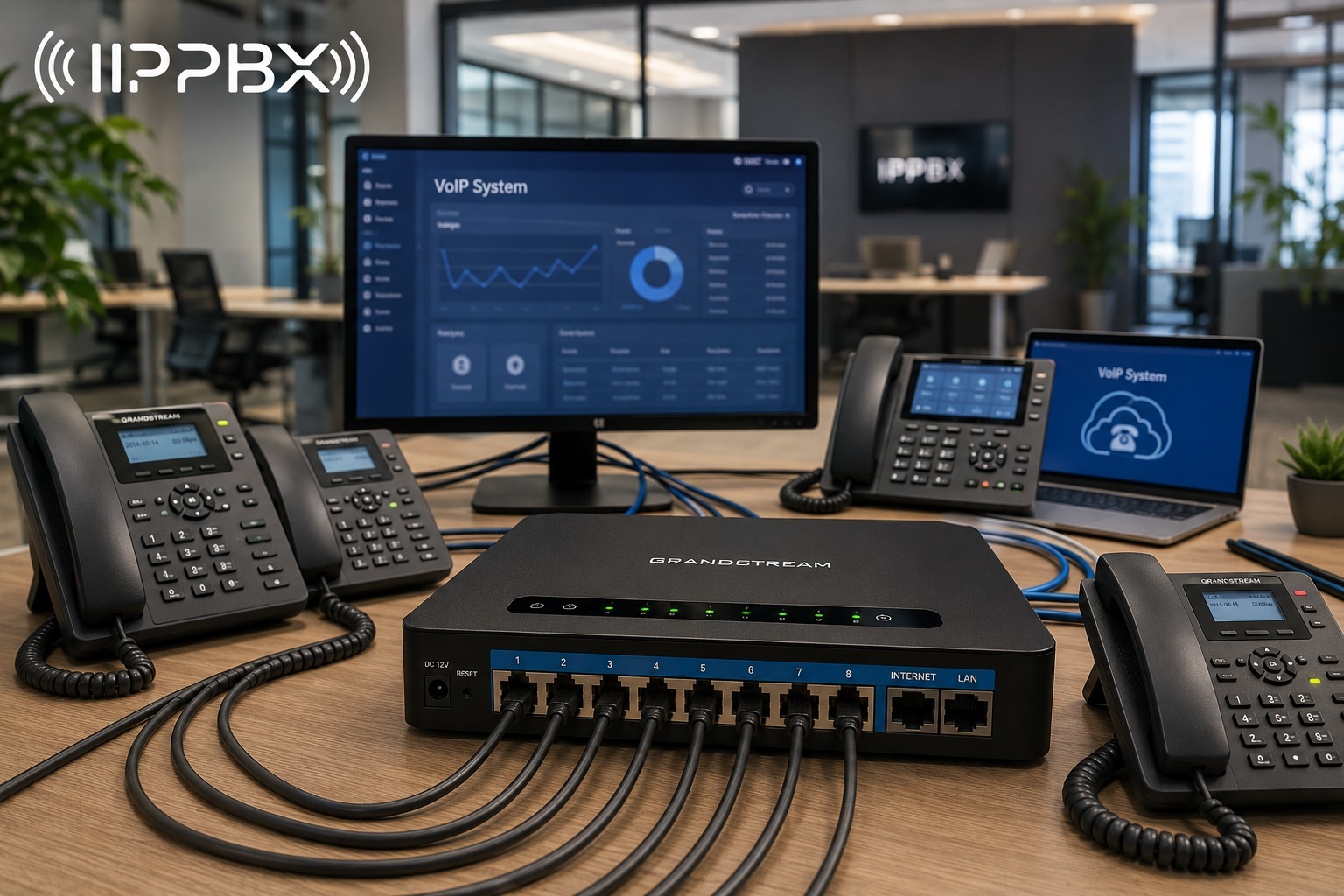
Grandstream 8-Port FXS Gateway
Grandstream 8-Port FXS Gateway: Complete Guide to HT818 Features, Setup,…

Just logged in to share how much I enjoy the straightforward approach this site takes. No confusing menus or hidden rules to figure out. Every promotion comes with clear instructions and the games run perfectly on both desktop and mobile. I appreciate how they listen to feedback and roll out updates that actually match what players want. luck22login
Very stable platform and the loading times are minimal. I appreciate the clean design and easy navigation. Try lumbung88login
I’m really enjoying the variety of themes on ph666jili. It is a fun place to unwind after work and try my luck. The graphics are sharp and the gameplay is fluid.