
Businesses today need fast, reliable, and flexible communication. Traditional phone systems can become expensive and difficult to manage, especially when a company has multiple employees, branches, or remote teams. This is why many organizations are moving toward VoIP solutions for businesses.
VoIP, or Voice over Internet Protocol, allows companies to make and receive calls through an internet connection instead of traditional telephone lines. With features such as call routing, voicemail, call recording, IVR, remote extensions, and reporting, VoIP can provide a complete communication system for modern businesses.
At IPPBX, businesses can find professional communication solutions designed for offices, call centers, enterprises, and remote teams.
What Are VoIP Solutions for Businesses?
VoIP solutions for businesses are communication systems that use the internet to handle business calls. Instead of sending voice signals through traditional telephone networks, VoIP converts voice into digital data and sends it over an IP network.
A business can use VoIP through IP phones, computers, mobile devices, or softphone applications. Furthermore, an IP PBX can manage extensions, incoming calls, outgoing calls, call queues, and other communication features from one central system.
This makes VoIP a practical option for companies that want better control over their business communication.
How Does Business VoIP Work?
The process is simple. First, your business connects its VoIP system to a reliable internet network. Next, IP phones or softphones connect to the VoIP platform or IP PBX.
When an employee makes a call, the system converts their voice into digital data. The data travels through the internet and reaches the receiver. The receiving system then converts the data back into audio.
A typical business VoIP setup can include:
- Internet connection
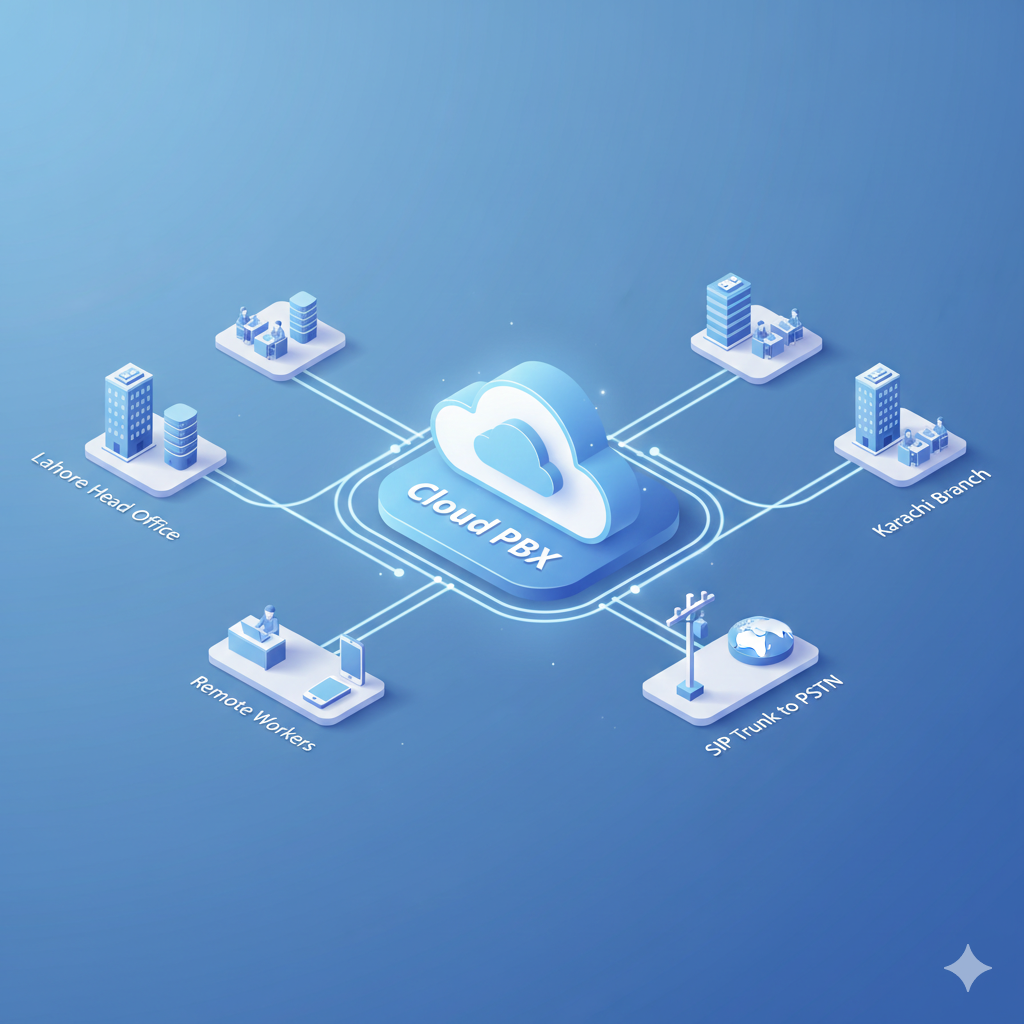
- IP PBX or cloud PBX
- SIP accounts or SIP trunks
- IP phones or softphones
- VoIP service
- Network switches and routers
- Firewall and security controls
As a result, companies can manage their complete phone system through a modern IP-based network.
Why Do Businesses Need VoIP?
Communication is an important part of almost every business. Sales teams need to contact customers, support teams need to answer calls, and managers need to communicate with employees and branches.
Traditional phone systems may not provide the flexibility that modern businesses need. In contrast, VoIP allows companies to build a more scalable communication environment.
Lower Communication Costs
One of the biggest advantages of VoIP is cost control. Businesses can reduce their dependence on traditional phone lines and manage calls through internet-based services.
International and long-distance calling can also become more affordable depending on the selected VoIP provider and calling plan.
Easy Business Expansion
A growing company may need new employees and extensions frequently. With a VoIP system, administrators can usually add users and extensions without rebuilding the entire telephone infrastructure.
Therefore, VoIP works well for startups, growing companies, and large organizations.
Support for Remote Employees
Modern companies often have employees working from home or from different cities. VoIP makes it possible to connect remote workers to the same business communication system.
Employees can use compatible IP phones, computers, or mobile devices to stay connected with their organization.
Advanced Call Management
Business VoIP systems can provide advanced features that are difficult to achieve with basic telephone services.
Depending on the system, businesses can use:
- Call forwarding
- Call routing
- Voicemail
- IVR menus
- Call recording
- Call queues
- Auto attendants
- Call monitoring
- Call reports
- Extension management
These features help businesses handle calls in a more organized way.
VoIP Solutions for Call Centers
Call centers have high communication demands. Agents may handle hundreds or thousands of calls every day, so a reliable phone system is essential.
VoIP solutions for businesses can support call center operations through features such as automatic call distribution, IVR, call recording, agent monitoring, call queues, and reporting.
An IP PBX can also connect the call center with SIP services, IP phones, CRM platforms, and other business tools.
For example, a customer can call a business number and select an option from an IVR menu. The system can then route the call to the correct department or available agent.
This reduces manual work and helps customers reach the right person faster.
VoIP and IP PBX: How Are They Connected?
VoIP and IP PBX are closely related, but they are not exactly the same thing.
VoIP is the technology used to transmit voice communication over an IP network. An IP PBX is a phone system that manages those communications within a business.
An IP PBX can manage extensions, call routing, voicemail, IVR, call forwarding, and other features. It can also connect to external VoIP or SIP services for incoming and outgoing calls.
For businesses that need centralized call management, combining VoIP services with an IP PBX can provide a complete communication solution.
SIP Services and Business VoIP
SIP, or Session Initiation Protocol, is commonly used to establish and manage internet-based voice calls.
SIP trunking allows businesses to connect an IP PBX with a telecommunications network. This can provide multiple concurrent calling channels and help companies manage incoming and outgoing calls.
IPPBX provides VoIP services that support business calling, IP phones, softphones, call routing, voicemail, call recording, and remote connectivity.
SIP can also help businesses scale their communication system as their call requirements increase.
Cloud VoIP vs On-Premise VoIP
Businesses can choose between different deployment models.
Cloud VoIP
Cloud-based VoIP systems are hosted remotely. Businesses do not need to maintain all PBX hardware on-site.
Cloud VoIP can be useful for companies with remote employees, multiple branches, or teams that need flexible access.
On-Premise VoIP
An on-premise system places the IP PBX within the business location. The company has more direct control over the hardware and network environment.
This option can be suitable for organizations that require specific configurations or want to manage their own communication infrastructure.
The right choice depends on company size, budget, technical requirements, security needs, and future growth.
Important Features to Look for in a Business VoIP System
Before choosing a VoIP system, businesses should consider the features they actually need.
Call Routing
Call routing directs incoming calls to the correct employee, department, branch, or queue.
Interactive Voice Response
IVR lets callers interact with an automated menu. For example, a caller can press one for sales, two for support, or three for accounts.
Call Recording
Call recording can help businesses review conversations, train employees, and maintain service quality.
Call Reporting
Reports provide useful information about call volume, duration, agent activity, and system performance.
Remote Extensions
Remote extensions allow employees in different locations to remain connected to the same business phone system.
CRM Integration
Connecting VoIP with CRM software can help employees access customer information and call history more efficiently.
How to Choose the Right VoIP Solution for Your Business
Every company has different communication requirements. Therefore, businesses should evaluate several factors before selecting a solution.
First, determine how many users and extensions you need. Next, estimate your local and international call volume. You should also consider whether employees will work remotely.
For call centers, additional requirements such as agent management, call recording, dialers, IVR, and reporting may be important.
Finally, check the provider’s technical support, security features, scalability, and integration options.
A professional provider can also assess your network and recommend an appropriate architecture.
Why Choose IPPBX for Business Communication?
IPPBX provides complete communication solutions for offices, enterprises, and call centers. Its services include IP PBX deployment, IP phone installation, VoIP integration, SIP trunking, cloud PBX, call center solutions, and technical support.
The company also focuses on scalable communication systems that can support SMEs as well as larger organizations.
Whether you need a few business extensions or a complete call center setup, choosing a properly designed VoIP system can make daily communication easier and more efficient.
Final Thoughts
VoIP solutions for businesses offer a modern alternative to traditional telephone systems. They can help companies control communication costs, support remote employees, improve call management, and scale their phone systems as they grow.
With features such as IVR, call routing, call recording, SIP integration, reporting, and IP PBX connectivity, VoIP can become an important part of a company’s communication infrastructure.
If your business is planning to upgrade its phone system, explore the available VoIP services from IPPBX and choose a solution that matches your users, call volume, network, and future business goals.
Frequently Asked Questions
What are VoIP solutions for businesses?
VoIP solutions allow businesses to make and receive phone calls over the internet using IP phones, softphones, IP PBX systems, or cloud-based platforms.
Is VoIP cheaper than traditional business phone systems?
VoIP can reduce communication costs by using internet connectivity and flexible calling services, although the final cost depends on usage, provider, equipment, and setup.
Can VoIP support remote employees?
Yes, VoIP can connect remote employees to the same business phone system through compatible IP phones, computers, or mobile devices.
Can VoIP be used for call centers?
Yes, VoIP is widely suited to call centers because it can support IVR, call routing, queues, recording, monitoring, reporting, and other call management features.
Do I need an IP PBX for business VoIP?
Not always. However, an IP PBX can provide centralized call management, extensions, routing, voicemail, IVR, and other advanced features for businesses.
For more Tech Products visit ipphone.com.pk
7 Replies to “VoIP Solutions for Businesses: Complete Guide to Modern Business Communication”
Leave a Reply
Related Posts
Best IPPBX for Home and Offices
Best IPPBX for Home and Offices – Smart Communication for…
Buy IPPBX System Online in Pakistan
Buy IPPBX System Online in Pakistan — Everything You Need…

So,I like it
I am impressed by the overall quality of the games. It is clear they put a lot of effort into the user experience. Check out krwinum now.
I like this
An Engaging Blog Post
WOW,Very wonderful
I AM BACK AGAIN
The content is really great