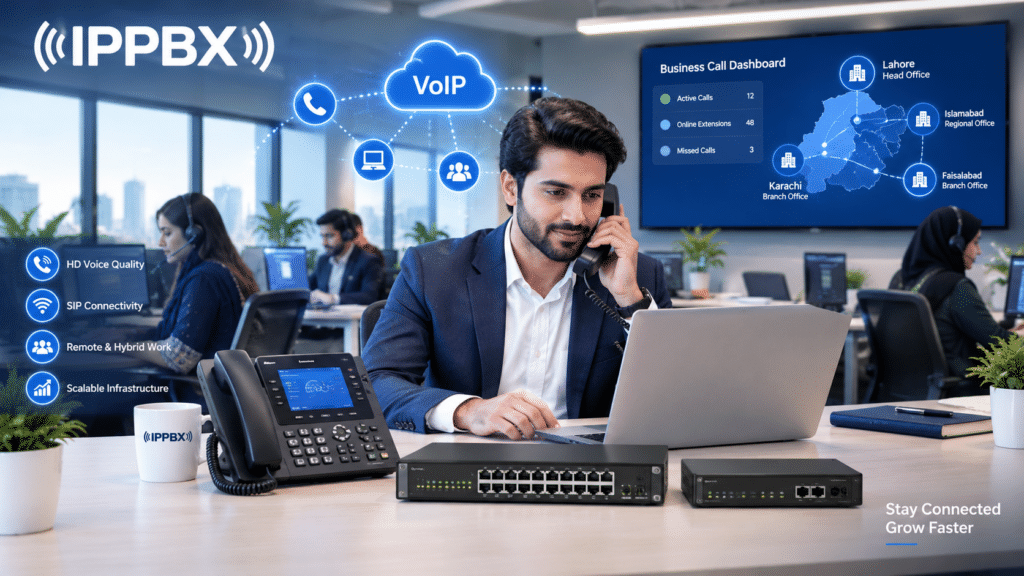
Good communication helps every business grow. Whether you run a small office, a large company, or a call center, you need a reliable way to connect with customers and employees. However, traditional telephone systems can become costly and difficult to manage as your business grows. A VoIP solution for businesses offers a modern way to make calls, manage communication, and support teams through the internet.
VoIP stands for Voice over Internet Protocol. It allows businesses to make and receive phone calls using an internet connection instead of relying only on traditional telephone lines. With the right setup, companies can connect multiple offices, manage customer calls, and support remote employees.
At IPPBX.com.pk, businesses can explore IP phones, IP PBX systems, switches, gateways, SIP services, VoIP services, and cloud PBX solutions to build a communication system that fits their needs.
What Is a VoIP Solution for Businesses?
A business VoIP solution is a telephone system that uses internet technology to carry voice calls. It converts your voice into digital data and sends it over an IP network to the person receiving the call.
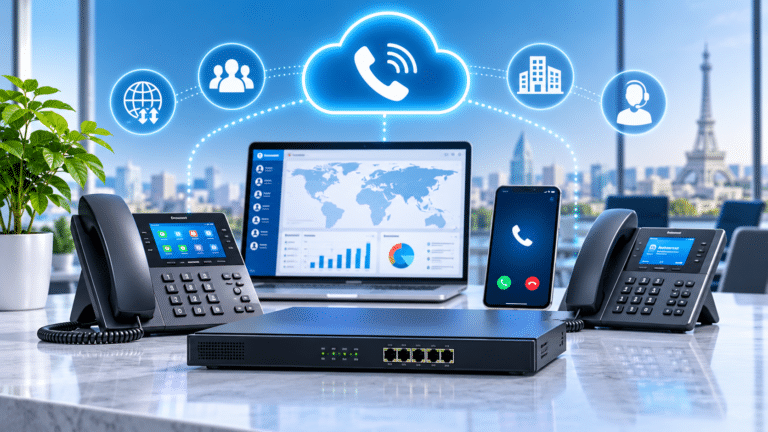
Businesses can use VoIP through IP phones, computers, smartphones, and compatible softphone applications. They can also connect the system to an IP PBX or cloud PBX to manage extensions, incoming calls, and outgoing calls from one central platform.
For example, a company with offices in Lahore, Karachi, and Islamabad can connect its employees through a shared phone system. Staff members can call each other using extensions and transfer customer calls between departments.
As a result, VoIP helps businesses manage communication more easily while preparing their phone systems for future growth.
Why Do Businesses Need VoIP Services?
Modern businesses need more than a basic telephone connection. They need flexible communication tools that help employees work efficiently and customers reach the right department.
1. Reduce Business Communication Costs
Traditional phone systems may require separate lines, costly hardware, and regular maintenance. In contrast, VoIP can use your existing internet network and may reduce some communication expenses.
Businesses that make frequent calls between offices or contact customers in different locations can benefit from suitable internet-based calling plans.
However, the final cost depends on the equipment, calling rates, internet service, and selected features.
2. Improve Call Quality
Clear communication helps businesses build trust with customers. A properly configured VoIP system can deliver clear voice calls when the internet connection and network equipment meet the required standards.
For the best results, businesses should use a stable internet connection, suitable bandwidth, and proper network settings. Quality of Service (QoS) configuration can also help prioritize voice traffic over less time-sensitive data.
3. Support Remote and Hybrid Teams
Employees do not always work from the same office. VoIP allows businesses to connect office staff, remote employees, and branch locations through a compatible phone system.
Depending on the setup, employees can use desk phones, computers, or mobile devices to manage business calls. Therefore, teams can stay connected even when they work from different locations.
4. Expand Communication as Your Business Grows
A growing company may need more employees, extensions, and calling channels. A scalable VoIP system makes it easier to add users and adjust communication features without rebuilding the entire setup.
This flexibility makes VoIP useful for startups, small businesses, medium-sized companies, and large enterprises.
Important Features of a Business VoIP System
A modern business phone system can offer several features that improve daily communication. The available options depend on your service provider and system configuration.
Call Routing and Call Forwarding
Call routing directs incoming calls to the correct employee or department. Call forwarding sends calls to another extension or number when the intended person cannot answer.
These features help businesses handle customer calls efficiently and reduce missed opportunities.
Interactive Voice Response (IVR)
IVR allows callers to select an option from an automated menu. For example, callers can press one for sales, two for technical support, or three for accounts.
This feature helps organize incoming calls and directs customers to the right team.
Call Recording and Monitoring
Call recording can help businesses review customer conversations, train employees, and improve service quality. Managers can also use available monitoring tools to understand call performance.
Businesses should follow applicable privacy requirements and inform callers about recording when required.
Conference Calling and Business Extensions
Conference calling helps employees hold group discussions without meeting in person. Meanwhile, business extensions allow each employee or department to have a simple internal number.
Together, these features make communication more organized across offices and teams.
VoIP, IP PBX, SIP Services, and Cloud PBX
A complete business communication system may include several technologies. Understanding their roles can help you choose the right solution.
IP PBX Systems
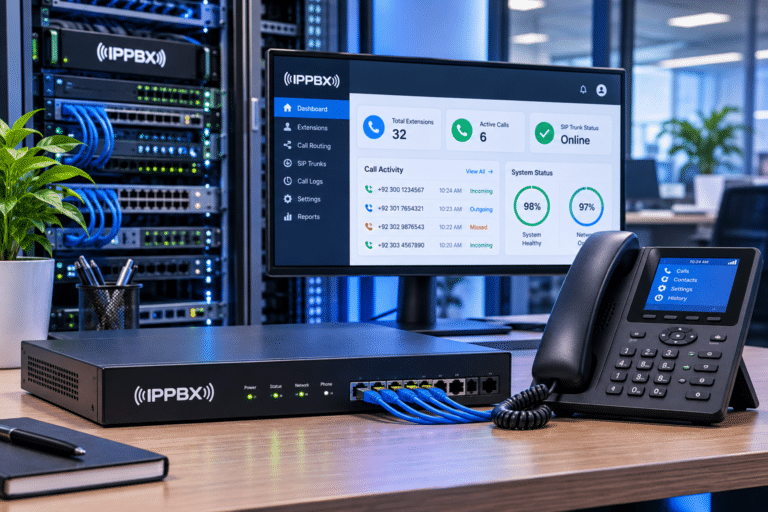
An IP PBX manages business calls, extensions, and call routing over an IP network. It can connect compatible IP phones and provide centralized control over the company’s telephone system.
Businesses that need advanced call management can explore IP PBX and PBX solutions in Pakistan.
SIP Services
Session Initiation Protocol (SIP) helps establish, manage, and end communication sessions. SIP trunking can connect an IP PBX to external telephone networks, allowing businesses to handle incoming and outgoing calls through supported channels.
Explore SIP services from IPPBX to learn more about internet-based business calling and SIP connectivity.
Cloud PBX Services
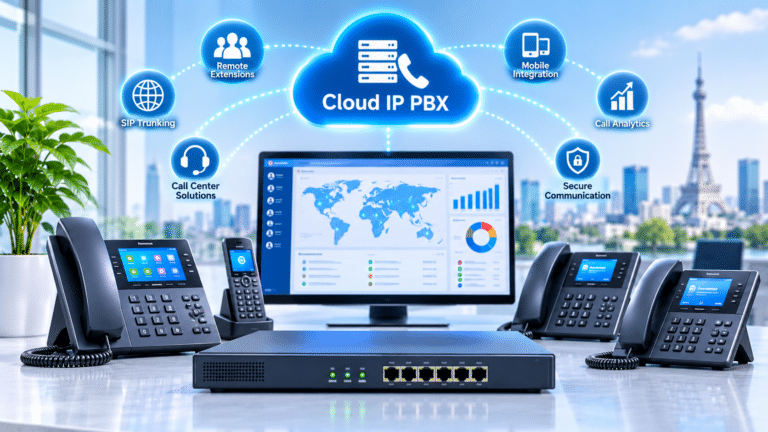
Cloud PBX hosts the main phone system on a remote platform rather than requiring all PBX equipment at the business location. It can help companies manage extensions and connect remote employees through compatible devices.
This option may suit businesses that want flexible administration and less on-site telephone infrastructure. Learn more about Cloud PBX services.
IP Phones and VoIP Gateways
IP phones provide dedicated devices for internet-based calling. VoIP gateways, on the other hand, connect compatible telephone equipment or networks to IP-based communication systems.
Businesses can combine these products with switches and PBX equipment to create a complete communication setup.
How to Choose the Right VoIP Solution
Every business has different communication needs. Therefore, you should consider the following factors before selecting a system.
Business size and users: Estimate how many employees need phone extensions today and how many you may need in the future.
Required features: Decide whether you need basic calling, IVR, call forwarding, recording, conference calling, or call center tools.
Internet connection: Check your available bandwidth, connection stability, latency, and network configuration before moving business calls online.
Security: Use strong passwords, secure device configurations, appropriate access controls, and regular software updates. Ask your provider about available protection against unauthorized access and fraudulent calls.
Equipment compatibility: Make sure your IP phones, switches, gateways, and PBX systems work together correctly.
Technical support: Choose a provider that can help with installation, configuration, troubleshooting, and future upgrades.
By reviewing these factors, you can select a VoIP solution that meets your current needs without limiting future growth.
VoIP Solutions for Small Businesses, Enterprises, and Call Centers
VoIP can support businesses of different sizes when the system matches their requirements.
Small businesses may need a few extensions, call forwarding, voicemail, and professional call handling. A suitable setup can provide these features without the complexity of a large traditional telephone system.
Medium-sized companies may require more extensions, multiple departments, SIP connectivity, and connections between branch offices. A scalable IP PBX or cloud PBX can help manage these needs.
Large enterprises and call centers often handle higher call volumes. They may require IVR, call queues, call recording, agent monitoring, reporting, and integration with customer relationship management (CRM) software.
With the right design, businesses can choose the features they need and expand the system as their communication requirements change.
Why Choose IPPBX for Business Communication?
IPPBX.com.pk provides business communication products and services, including IP phones, PBX systems, network switches, gateways, SIP services, VoIP services, and cloud PBX solutions.
Businesses can explore these options to create a communication setup for an office, enterprise, or call center. The right combination depends on the number of users, expected call volume, network conditions, and required features.
Professional installation and configuration can also help businesses connect their equipment, set up extensions, organize call routes, and maintain reliable communication.
To explore available options, visit the IPPBX website or review its VoIP services.
Conclusion
A VoIP solution for businesses provides a flexible way to manage calls, connect employees, and improve daily communication. It can help companies control communication expenses, support remote teams, organize incoming calls, and expand their phone systems as they grow.
By combining VoIP with IP phones, IP PBX systems, SIP services, gateways, and cloud PBX, businesses can build a communication setup around their needs.
Before choosing a solution, compare the features, equipment, internet requirements, security, and support available. With the right planning and configuration, your business can create a reliable communication system that supports better customer service and long-term growth.
Frequently Asked Questions
1. What is a VoIP solution for businesses?
A VoIP solution allows businesses to make and receive calls over the internet using IP phones, softphones, or compatible PBX systems.
2. Is VoIP suitable for small businesses?
Yes, VoIP can provide small businesses with affordable calling options, extensions, call forwarding, voicemail, and other useful communication features.
3. What is the difference between VoIP and IP PBX?
VoIP carries voice calls over an IP network, while an IP PBX manages extensions, call routing, and other business phone system functions.
4. Does a business need special phones for VoIP?
Not always; businesses can use compatible IP phones, computers, smartphones, or softphone applications depending on their chosen system.
5. Can VoIP connect employees in different cities?
Yes, a properly configured VoIP system can connect employees and branches in different cities through a shared business communication platform.
For more Related services CLICK HERE.